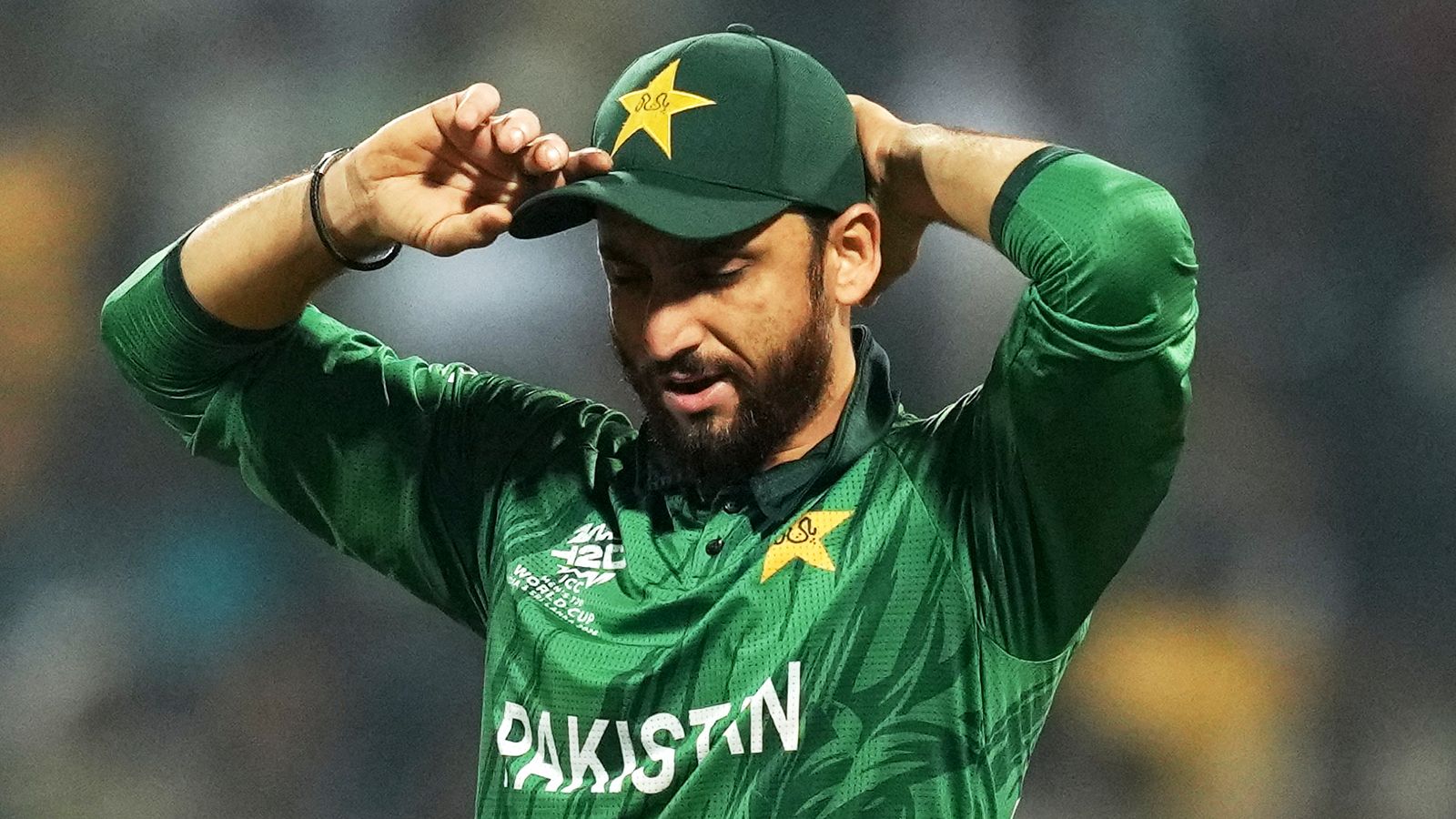
T20 World Cup: Pakistan's Semi-Final Dream Ends Amidst Batting Concerns
The curtains have fallen on Pakistan's journey in the T20 World Cup, a campaign that concluded with a bittersweet victory against Sri Lanka but ultimately failed to secure a coveted spot in the semi-finals. Despite a heroic century from Sahibzada Farhan and a commanding total, the Green Shirts' fate was sealed by the intricate mathematics of net run rate, sending New Zealand through to the knockout stage instead. This elimination, while agonizing, has starkly brought to the forefront long-standing issues within the squad, particularly concerning their batting lineup, which captain Salman Ali Agha candidly acknowledged as a persistent Achilles' heel. The dream of a T20 World Cup semi-final appearance, once within grasp, evaporated, leaving fans and pundits to ponder the road ahead for Pakistan cricket.
A Thrilling Victory, A Bitter Elimination: The Numbers Game
The final Super Eights Group Two clash against an already-eliminated Sri Lanka in Pallekele was a spectacle of power-hitting and strategic calculations. Pakistan, batting first, put on an imposing total of 212-8, spearheaded by a record-breaking opening stand. Sahibzada Farhan blazed his way to a magnificent 100 runs off 60 balls, while Fakhar Zaman provided explosive support with an 84-run contribution. Their 176-run partnership for the first wicket etched itself into T20 World Cup history, setting a formidable target for Sri Lanka.
However, the pursuit of a semi-final berth wasn't merely about winning; it was about the margin of victory. To overtake New Zealand on net run rate, Pakistan needed to restrict Sri Lanka to a maximum of 147 runs. The tension was palpable as Sri Lanka began their chase, knowing their own World Cup hopes were already dashed but holding the power to influence Pakistan's. Despite early breakthroughs, Sri Lanka’s batsmen, particularly Dasun Shanaka, showed tremendous resolve. Shanaka's explosive 76 off just 31 balls, including a hat-trick of sixes, pushed Pakistan to the brink. While Pakistan ultimately secured a narrow five-run victory, finishing Sri Lanka's innings at 207-6, it wasn't enough. The moment Sri Lanka crossed the 147-run mark with five overs still to play, Pakistan's semi-final hopes were officially extinguished, cementing New Zealand's progression. This outcome resonated deeply across the cricketing world, highlighting how
Net Run Rate Decides: Pakistan Eliminated, New Zealand Reach T20 Semis. The heartbreaking end to their tournament,
Pakistan Out Despite Win: Farhan Century Not Enough for T20 Semi-Finals, underscores the fine margins in elite T20 cricket.
Captain's Corner: Dew, Missed Opportunities, and Persistent Batting Woes
In the aftermath of the match, Pakistan captain Salman Ali Agha offered a candid assessment, pointing to several factors that contributed to their early exit. Agha highlighted the impact of the toss, stating, "When I lost the toss, it was always going to be challenging because of the dew." The dew factor, a common challenge in night matches on the subcontinent, significantly complicates bowling, making grip difficult and aiding the chasing side. He lamented the inability to execute their bowling plans effectively under these conditions, specifically mentioning spinner Usman Tariq's "off-day," despite his otherwise exceptional performance throughout the tournament.
However, the most significant revelation from Agha's post-match comments was the long-standing concern about their batting. "We didn't bat well in the tournament. It was only Sahibzada Farhan who batted exceptionally well. Our batting was always a concern, especially the middle order. It's been an issue for a few years now. We need to sit down and look at that department." This admission cuts to the core of Pakistan's T20 struggles, indicating a systemic issue rather than an isolated slump. He also mused about the fine margins, suggesting that "If we'd done well, scored 10-15 more, it could've been a different story," implying that a slightly higher total might have absorbed the impact of the challenging bowling conditions or provided a larger buffer for the NRR calculation.
Beyond the Openers: Unpacking Pakistan's Middle-Order Malaise
While the blistering performances of Sahibzada Farhan and Fakhar Zaman in their final match showcased Pakistan's potential at the top, the captain's remarks pinpointed the Achilles' heel: the middle order. This isn't a new problem; it's a recurring narrative for Pakistan in white-ball cricket, particularly in the high-stakes, rapid-fire environment of T20s.
The issues with Pakistan's middle order are multi-faceted:
- Lack of Power-Hitters: Unlike top T20 sides that boast batsmen capable of clearing boundaries consistently in the death overs, Pakistan often struggles to accelerate effectively in the middle and late stages of an innings. This puts immense pressure on the openers to score big or leaves the team short of competitive totals.
- Inconsistency and Fragility: There's often a significant drop-off in form and reliability once the opening partnership is broken. The middle-order batsmen frequently fail to build on good starts or navigate tricky phases, leading to collapses.
- Inability to Rotate Strike: Beyond just hitting boundaries, a crucial aspect of T20 batting is intelligently rotating the strike to prevent dot balls from piling up. Pakistan's middle order sometimes struggles with this, allowing opposition bowlers to build pressure.
- Handling Pressure: In high-pressure situations, especially during run chases or when quick runs are needed, the middle order has often shown vulnerability, leading to poor shot selection and untimely dismissals.
- Role Definition: There appears to be a lack of clear role definition within the middle order. Who is the designated finisher? Who is the anchor who can switch gears? These questions often remain unanswered on the field.
This persistent issue means that even exceptional opening partnerships, like the one witnessed against Sri Lanka, often feel like isolated brilliance rather than part of a cohesive batting unit. When the top order falters, the lack of depth and consistent performance in the middle order becomes glaringly apparent, proving detrimental to the team's overall competitiveness in crunch games for the pakistan semi-final spot.
Charting a Course Forward: Rebuilding for Future T20 Campaigns
The disappointment of failing to reach the pakistan semi-final stage despite a final group-stage victory must serve as a catalyst for profound introspection and strategic reform within Pakistan cricket. Salman Ali Agha's call to "sit down and look at that department" needs to translate into actionable steps, focusing on both immediate tactical adjustments and long-term structural changes.
Here are some pathways for rebuilding and strengthening Pakistan's T20 batting unit:
1. Strategic Player Development and Selection:
- Embrace Power-Hitting: The domestic T20 circuit must actively encourage and reward aggressive, boundary-hitting batsmen. Talent scouts should prioritize players who demonstrate the ability to clear the ropes consistently, especially in the middle and death overs.
- Specialized Roles: Identify and groom specialists for various middle-order roles: a reliable anchor who can accelerate, a dedicated finisher, and versatile batsmen who can adapt to different match situations.
- Youth Integration: Fast-track promising young talents who exhibit strong T20 credentials, providing them with ample opportunities and a clear pathway to the national team.
2. Tactical and Training Adjustments:
- Simulated Pressure Training: Incorporate high-pressure scenarios into training sessions, forcing batsmen to make quick decisions and execute under duress, mirroring actual match situations.
- Net Run Rate Awareness: Integrate NRR calculations into match strategies from the outset of tournaments, not just as a last-minute scramble. This involves educating players on how every boundary saved or conceded, and every run scored or limited, impacts their standing.
- Mental Conditioning: Invest in sports psychologists and mental conditioning coaches to help players develop resilience, maintain focus, and manage anxiety in high-stakes environments.
3. Data-Driven Decision Making:
- Advanced Analytics: Utilize cutting-edge data analytics to identify specific weaknesses in batting against different bowling types, at various stages of an innings, and in different conditions. This can inform selection, training, and in-game strategies.
- Benchmarking: Study the strategies and player profiles of successful T20 teams to identify best practices and potential areas for adaptation within Pakistan's setup.
4. Fostering a Culture of Aggression and Adaptability:
- Encourage Intent: Instill a mindset where batsmen are encouraged to play with positive intent, looking for scoring opportunities rather than merely surviving.
- Flexible Batting Orders: Be willing to experiment with batting orders based on match situations and opposition strengths, empowering batsmen to adapt their game.
The end of Pakistan's T20 World Cup journey, marked by the tantalizing proximity to a semi-final spot, serves as a crucial wake-up call. While the individual brilliance of players like Sahibzada Farhan offered glimpses of what could be, the team's overarching batting concerns, particularly in the middle order, ultimately proved insurmountable. To truly contend for future global titles, Pakistan must embark on a comprehensive overhaul, moving beyond individual heroics to build a cohesive, resilient, and tactically astute batting unit. Only then can they consistently turn semi-final aspirations into championship realities.